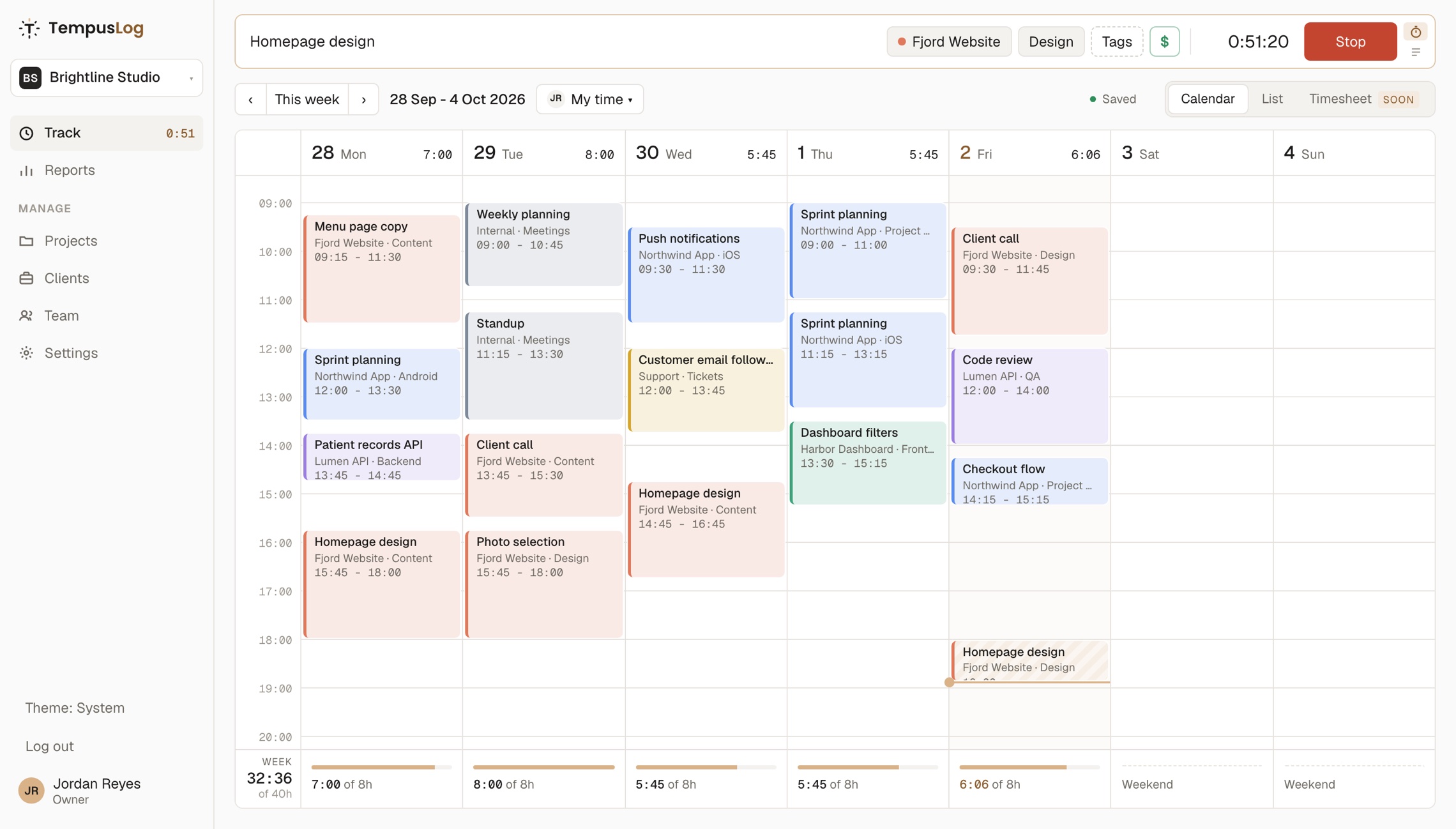
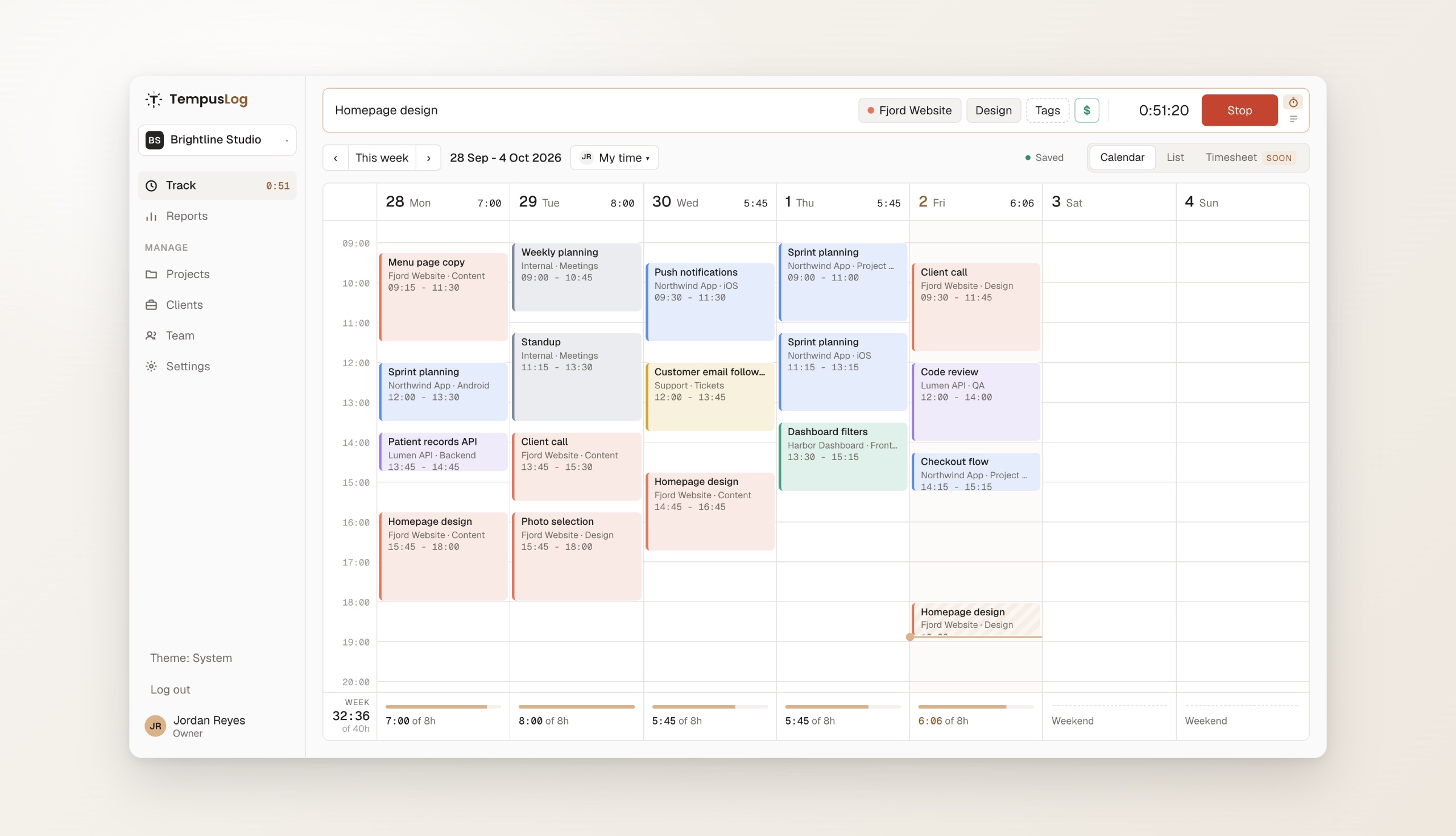
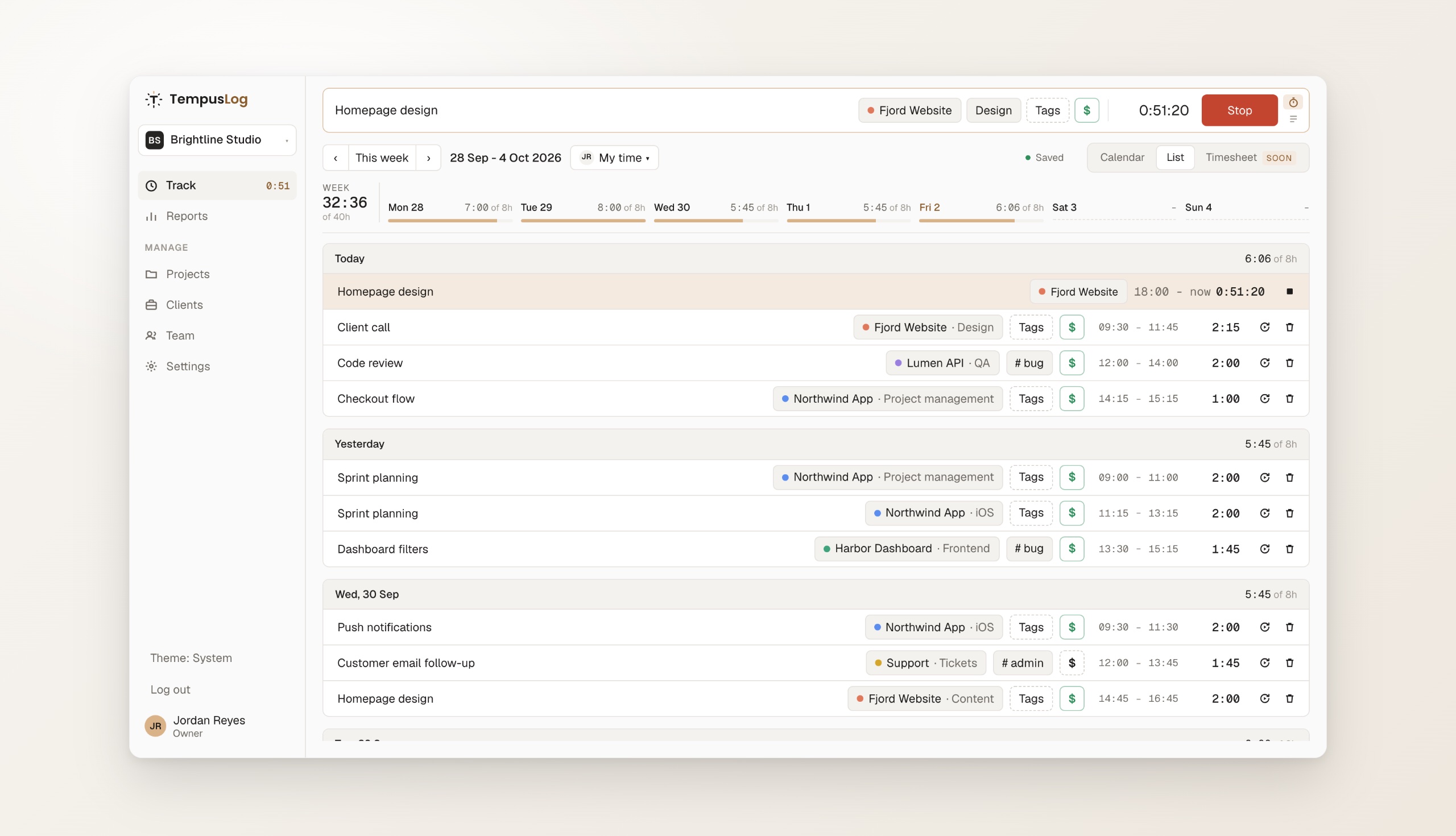
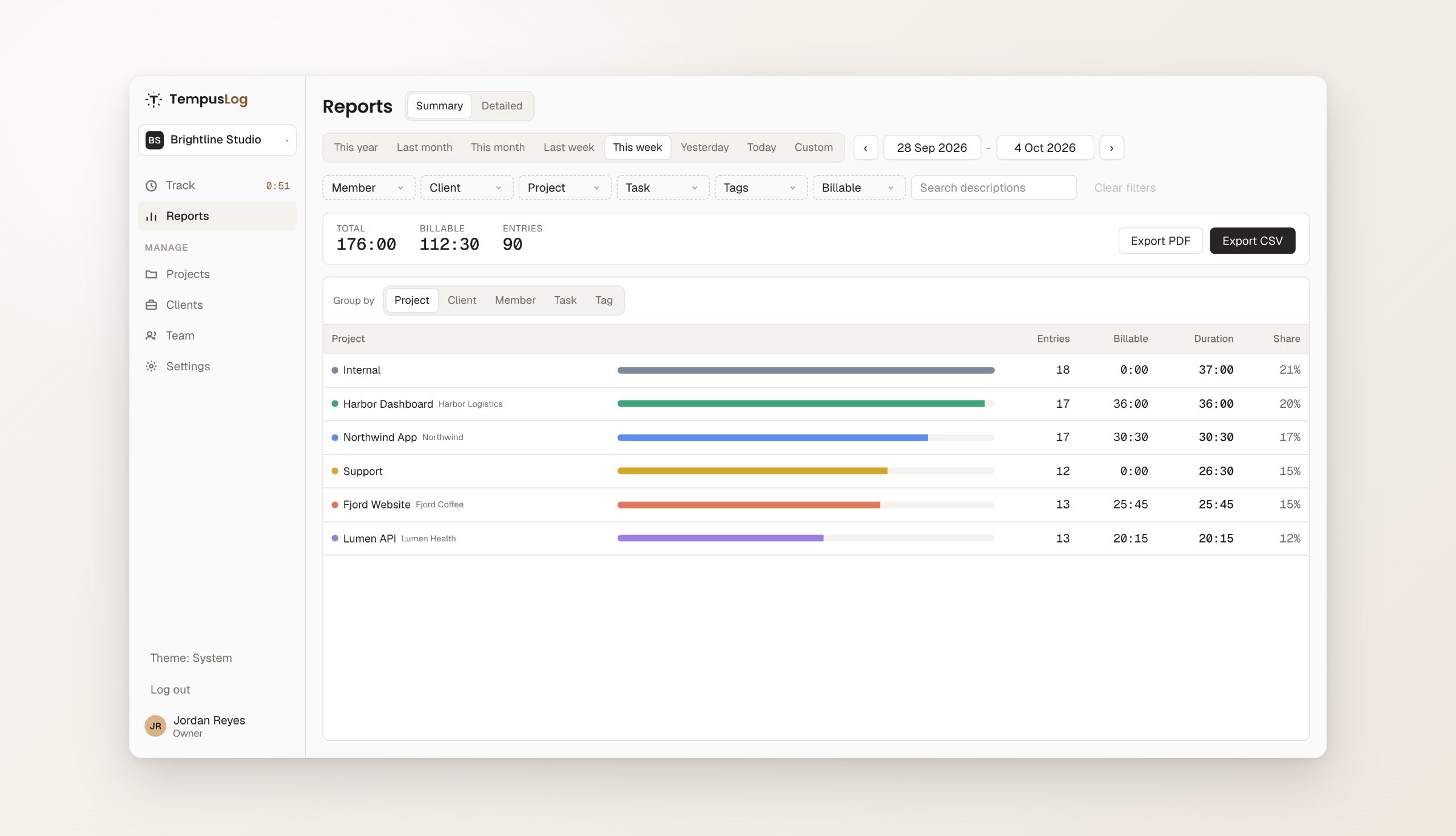
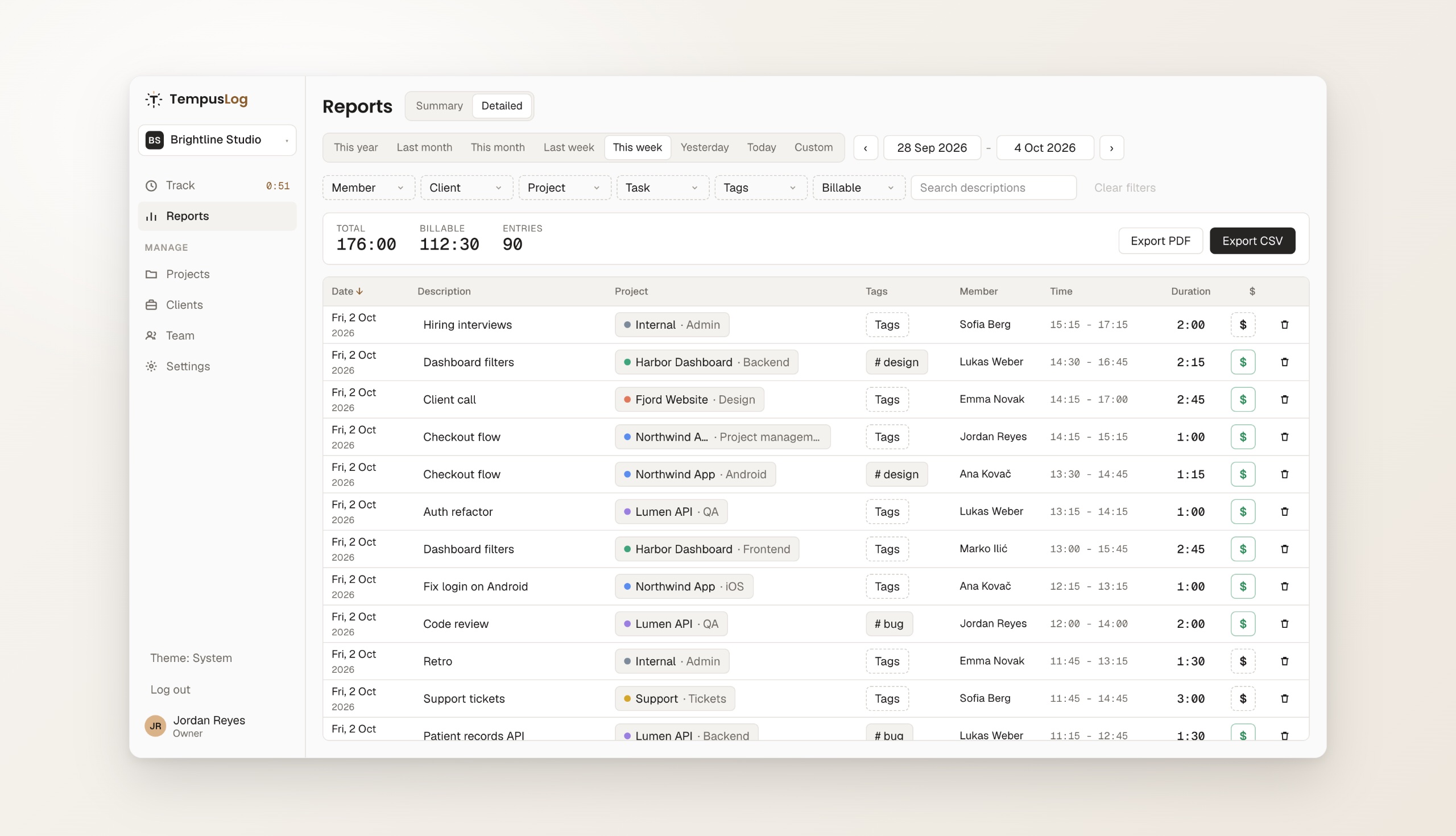
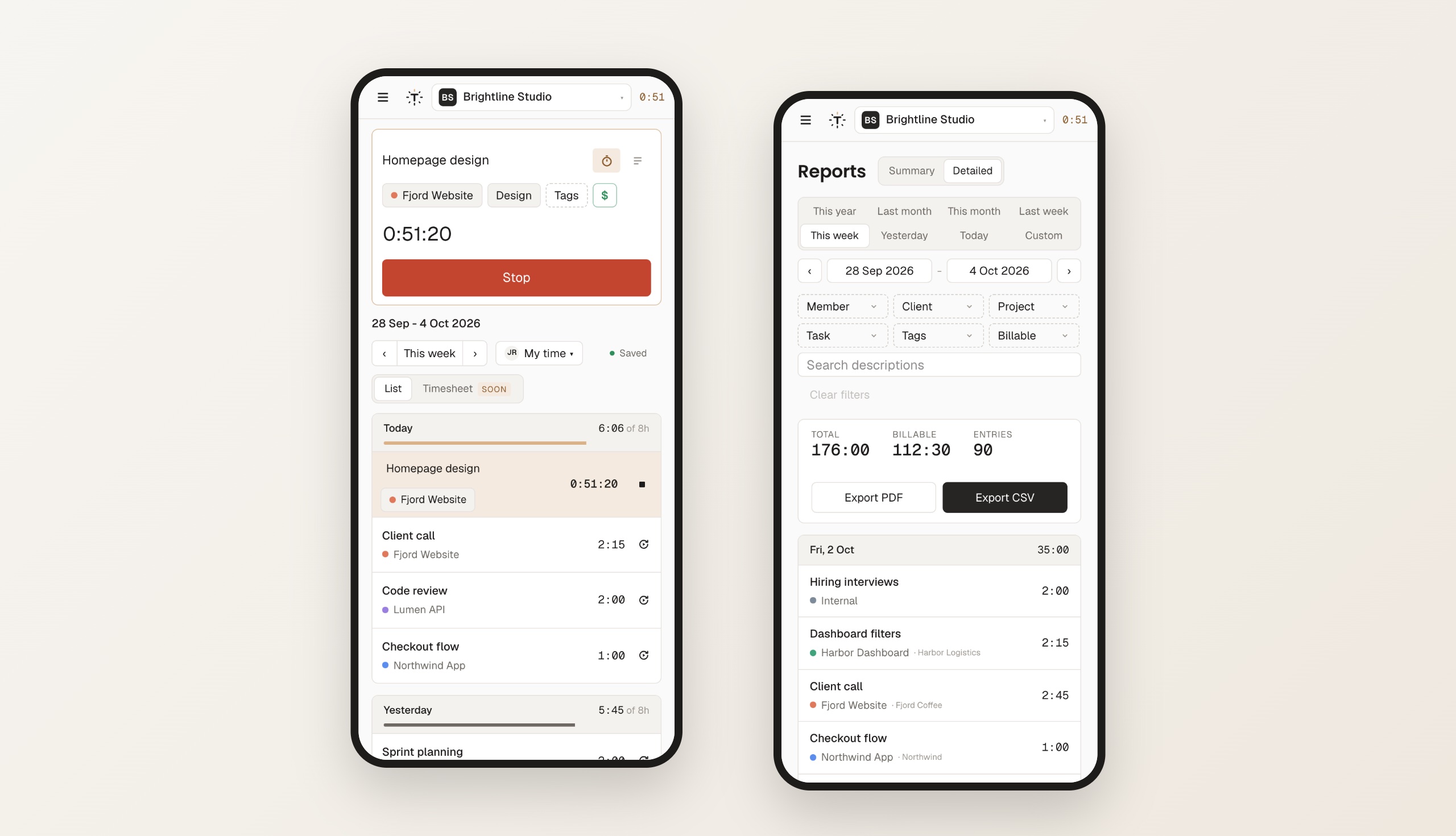
TempusLog is a free time tracker for teams. Start a timer or add time afterwards, see the week on a calendar, and get reports your clients understand.
mile.dev designed, built, and runs it, and our own team tracks every working hour in it. It is free for any team size, with no per-user price and no limits on people or projects.
TempusLog works in any browser, on desktop or phone, and connects to AI apps such as Claude and ChatGPT, so people can log time in plain words, for example “log two hours on the website redesign yesterday.” Data is stored in Frankfurt, Germany, with no ads, no selling of data, and no AI training on customer data.


This meant:


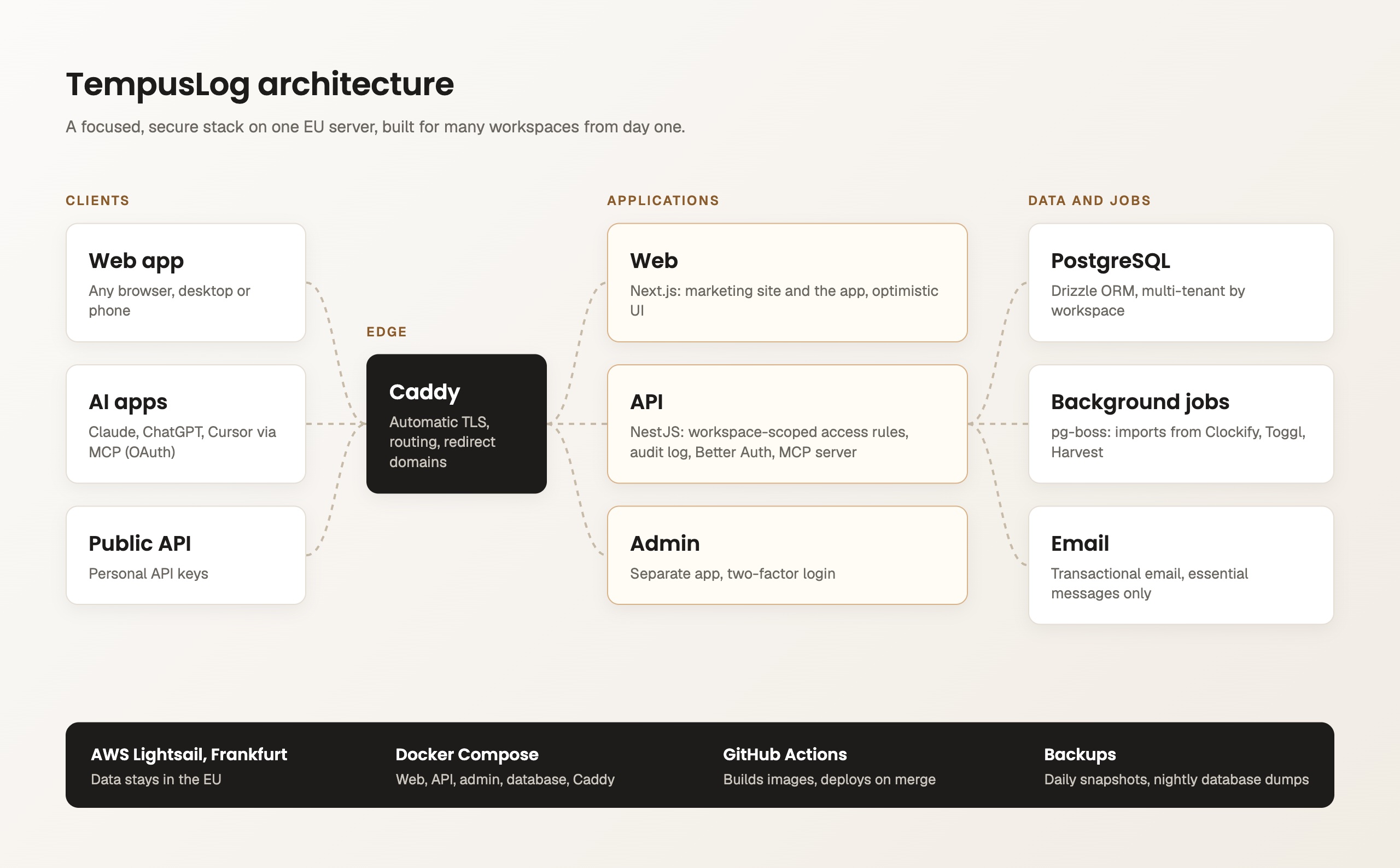
TempusLog runs as a multi-tenant platform on its own server in Frankfurt, so data stays in the EU and its traffic never touches our other systems. Every request is scoped to a workspace, every change is audit-logged, and imports run as background jobs, so large histories move across without slowing the app down.
It was built the way we build client software: AI-assisted development, with senior engineers owning the architecture, security, and quality.

TempusLog has been live since September 2026. The mile.dev team moved its full history across, more than 13,000 time entries, and tracks every working hour in it.
It is listed on G2, available in Claude’s connector directory, and published in the official MCP Registry.
TempusLog already pays for itself in two ways. It replaced a per-seat subscription for our own team, and it shows the kind of software mile.dev builds for clients: focused, secure, and maintained for the long term. Everything a team needs to track time stays free forever. Heavier company features, such as cost rates and profit, budgets, approvals, and invoicing, will come later as optional paid additions.
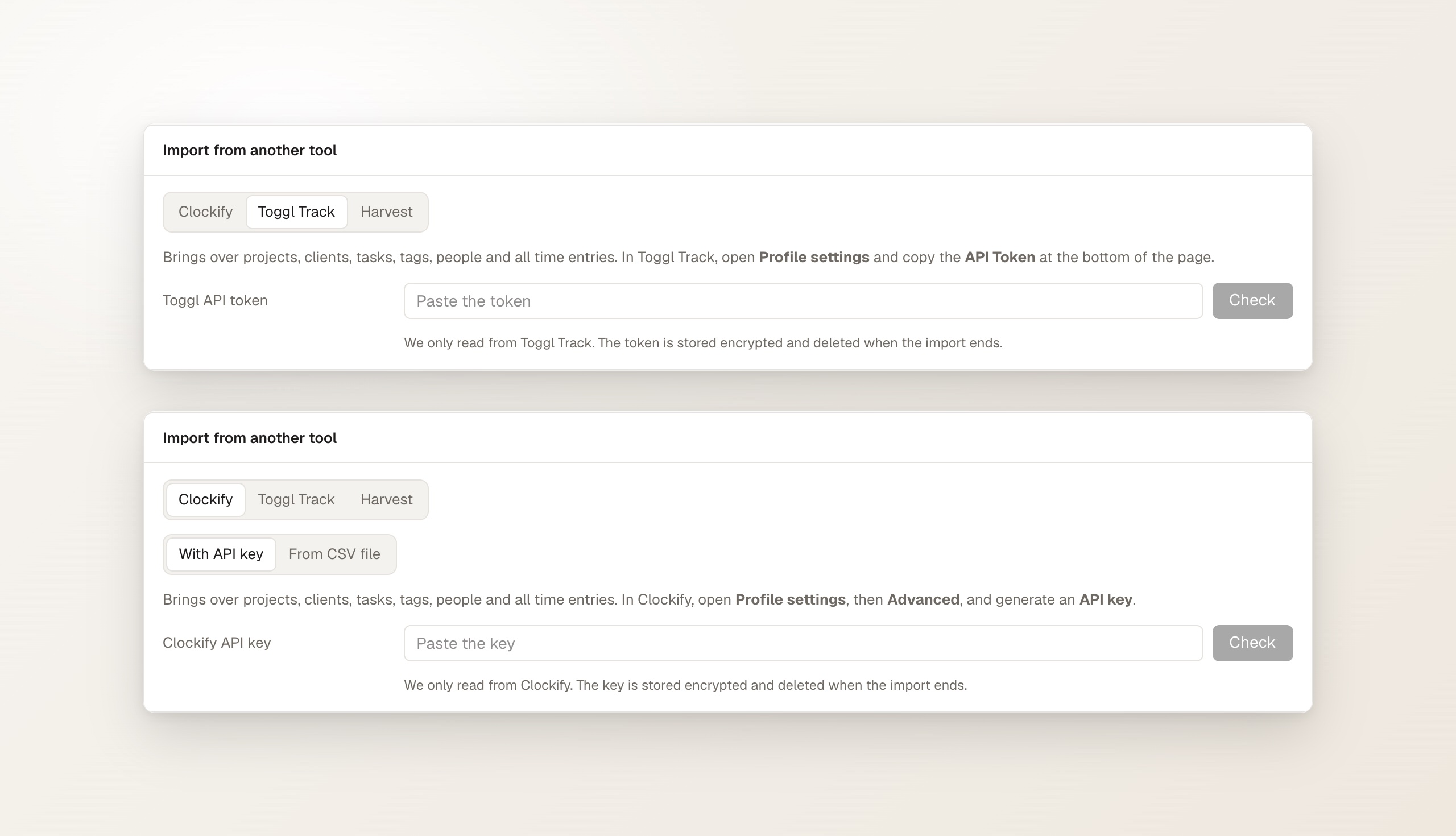
Teams switching from another tracker can import projects, clients, tasks, tags, people, and every time entry from Clockify, Toggl Track, and Harvest, so their full history moves across with them.